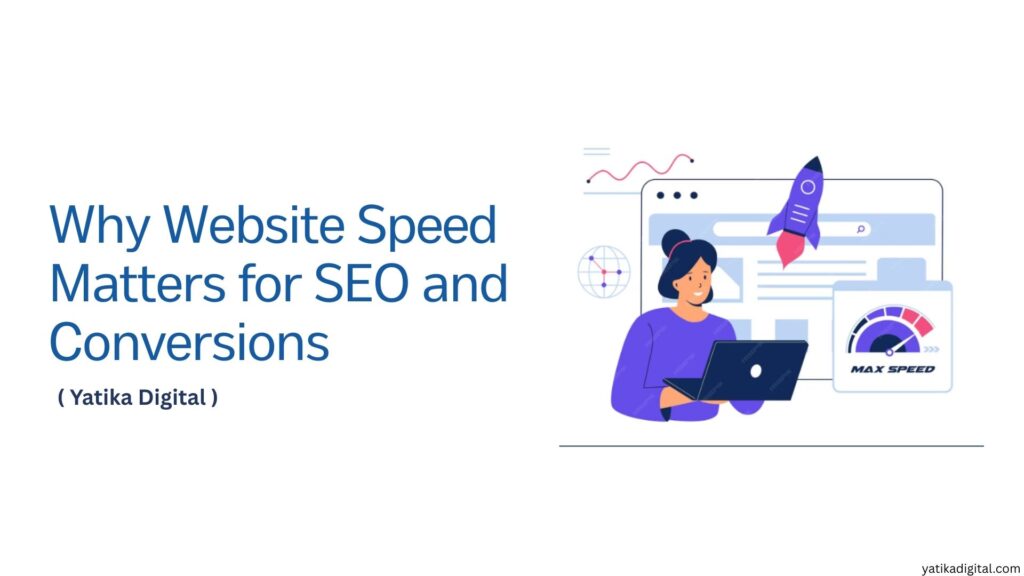
In today’s fast-moving digital world, people expect websites to load instantly. If a page takes too long, most users don’t wait—they leave. This simple behavior is exactly why website speed matters so much for both SEO and conversions.
Whether you run a small business website, an e-commerce store, or a service-based company, website speed directly affects how users experience your site and how Google ranks it. A slow website doesn’t just frustrate visitors; it quietly pushes your rankings and sales down.
Let’s understand why website speed is so important and how it impacts real business results.
What Is Website Speed?
Website speed refers to how quickly your web pages load and become usable for visitors. This includes:
- How fast does the page content appear?
- How quickly users can click buttons or scroll
- How long does it take before the page fully loads
Google usually measures this using real-world data, especially how fast a page loads on mobile devices.
Why Website Speed Is Important for SEO
Google’s goal is simple: show users the best possible results. A slow website creates a poor user experience, and Google doesn’t want to rank pages that frustrate users.
Google Uses Speed as a Ranking Factor
Google officially considers page speed a ranking factor, especially for mobile search. If two websites have similar content quality, the faster website often ranks higher.
This means even well-written content can struggle to rank if the website is slow.
Core Web Vitals and Website Speed
Google introduced Core Web Vitals to measure user experience. These focus on:
- How fast does the main content load?
- How quickly users can interact
- How stable the page layout is
If your website fails these speed-related metrics, it can negatively affect rankings—even if your SEO content is good.
How Website Speed Affects User Experience
People don’t analyze website speed consciously. They simply react.
Slow Websites Increase Bounce Rate
When a page takes more than a few seconds to load, users leave without reading anything. This is called a high bounce rate.
Example:
A local service website loads in 6 seconds. A competitor’s site loads in 2 seconds. Most users will stay on the faster site, even if both offer similar services.
Google notices this behavior and assumes the faster site provides a better experience.
First Impressions Matter
Your website speed creates the first impression of your business. A slow site feels outdated and unreliable, while a fast site feels professional and trustworthy.
For businesses, this impression can decide whether a visitor becomes a customer or not.
Why Website Speed Matters for Conversions
SEO brings traffic, but conversions bring business. Website speed plays a huge role here.
Faster Websites Convert Better
When a website loads quickly, users are more likely to:
- Read content
- Fill out forms
- Make purchases
- Contact your business
Even a one-second delay can reduce conversion rates noticeably.
Real Example: Speed and Sales
An online store improves its loading time from 5 seconds to 2 seconds. After the change:
- Bounce rate drops
- Time on site increases
- Checkout completions improve
Nothing else changed—only speed. Yet sales increased.
This happens because fast websites remove friction. Users can move smoothly from interest to action.
Website Speed and Mobile Users
Most users now visit websites from mobile phones. Mobile users are even less patient than desktop users.
Mobile Speed Is Critical
A website that loads slowly on mobile loses users instantly. Google uses mobile-first indexing, which means it judges your site mainly by its mobile performance.
If your website is slow on mobile:
- Rankings suffer
- Traffic drops
- Leads decrease
How Website Speed Impacts Business Trust
Speed affects how people feel about your brand.
A slow website can make users think:
- The business is not professional
- The site is not secure
- The service may be unreliable
On the other hand, a fast website builds confidence and trust without saying a single word.
Common Reasons Websites Are Slow
Many business websites are slow without the owner realizing it. Common causes include:
Heavy Images
Large, uncompressed images are one of the biggest speed killers.
Too Many Plugins
Excess plugins add extra scripts that slow down loading.
Poor Hosting
Cheap or overloaded hosting servers reduce performance.
No Caching
Without caching, pages load from scratch every time.
Simple Ways to Improve Website Speed
You don’t need advanced technical knowledge to improve speed. Some basic steps make a big difference.
Optimize Images
Resize and compress images before uploading them.
Use Quality Hosting
Good hosting improves speed, security, and stability.
Enable Caching
Caching helps pages load faster for returning visitors.
Remove Unnecessary Scripts
Clean code improves loading time and performance.
Website Speed and Long-Term SEO Growth
Website speed is not a one-time fix. It’s a long-term advantage.
Fast websites:
- Rank more consistently
- Handle traffic spikes better
- Deliver a better user experience
- Convert visitors into customers
Over time, this creates a strong foundation for sustainable SEO growth.
Final Thoughts: Speed Is Not Optional Anymore
Website speed is no longer just a technical detail. It directly affects SEO rankings, user experience, trust, and conversions.
A slow website silently loses traffic and sales every day. A fast website works like a strong salesperson—welcoming users, keeping them engaged, and guiding them toward action.
Optimize your website speed today and create a faster, stronger foundation for SEO and business growth.